
 Pусский
 中文
中文

back-up roll
Sure — here is a 500-word English description of a back-up roll without any company names:---A back-up roll is an essential component used in rolling mills, especially in the production of steel and other metal products. Its main function is to support the work roll and prevent excessive bending during the rolling process. Because rolling mills operate under extremely high pressure, the back-up roll plays a critical role in maintaining the accuracy, stability, and quality of the final rolled material.Back-up rolls are typically much larger and stronger than work rolls. They are designed to absorb and distribute the heavy forces generated during rolling, which helps ensure uniform thickness and surface quality of the rolled strip or plate. Without a back-up roll, the work roll could deform under pressure, leading to uneven rolling, reduced precision, and possible equipment damage. Therefore, the back-up roll is a key element in achieving efficient and reliable mill operation.These rolls are usually made from high-quality alloy steel or forged steel, and they undergo special heat treatment processes to improve hardness, toughness, and wear resistance. In many cases, the surface must also have excellent fatigue strength, since the roll is exposed to repeated stress over long periods of operation. The manufacturing process requires strict control of chemical composition, internal structure, and mechanical properties to ensure durability and performance.Back-up rolls are used in various types of rolling mills, including hot rolling mills and cold rolling mills. In hot rolling applications, they must withstand high temperatures, heavy loads, and harsh working conditions. In cold rolling mills, they help maintain precise dimensional control and surface finish, which are especially important for high-quality sheet and strip products. Depending on the mill design, a back-up roll may be arranged in two-high, four-high, or multi-high mill configurations.During operation, back-up rolls are subject to high contact pressure, repeated loading, and possible surface fatigue. To extend service life, they require regular inspection, maintenance, and grinding. Common issues include surface cracks, spalling, wear, and thermal damage. Proper maintenance helps reduce downtime and ensures stable mill performance. In many plants, roll management systems are used to track roll usage, schedule maintenance, and optimize roll life.The performance of a back-up roll directly affects production efficiency, product quality, and operating costs. A well-designed and properly maintained back-up roll can improve mill stability, reduce roll deformation, and lower the risk of defects in the finished product. For this reason, it is considered one of the most important parts of the rolling mill system.In summary, the back-up roll is a heavy-duty support roll that helps rolling mills operate with accuracy, strength, and consistency. Its role in supporting the work roll makes it indispensable in modern metal processing industries.---If you want, I can also provide:1. a more technical version, 2. a simpler version, or 3. a version tailored for product catalog/website use.
Products
Category:
-
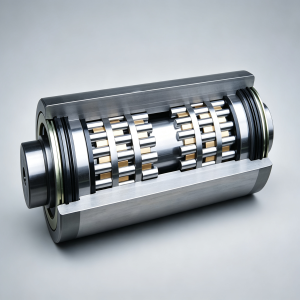
Back-Up Roll
Category: Non-standard bearingBrowse number: 73Number:Release time: 2026-07-05 16:47:27Back-up roll supports the intermediate roll or work roll in the leveling process, preventing the intermediate or work roll bending deflection. So it requires the back-up roll having enough capacity, and linear contacting with intermediate roll or work roll for better supporting.
News
Category:
No search results found!
Case
Category:
No search results found!
Video
Category:
No search results found!
Download
Category:
No search results found!
Job
Category:
No search results found!
Featured Products
No search results found!


